




February 2026 · Nature & Wildlife
Birdwatching in Abel Tasman: How to Get Started
You don't need binoculars and a decade of practice to spot tūī, weka and little blue penguins. Here's a beginner's guide to the park's birdlife.
Abel Tasman's native bush, estuaries and coastline support a surprising range of birdlife, and you don't need to be a dedicated birder to enjoy spotting it. A short walk or a quiet stretch of cruise is often all it takes. Here's what to look and listen for, and a few tips for getting started.
Start with your ears, not your eyes
In dense native bush, you'll usually hear a bird well before you see it. The tūī's bell-like, chattering call is one of the easiest to learn, listen for it especially in early morning along forested sections of the Coast Track. Once you can pick out a call, spotting the bird itself becomes much easier.
Birds to listen for
- Tūī: loud, varied, almost mechanical-sounding call; look for the white throat tuft
- Bellbird (korimako): a clear, bell-like song, often heard at dawn and dusk
- Weka: a sharp, repeated call from ground level; often the boldest bird you'll see up close
- Kākā: a harsh, screeching call overhead, usually in flight between forest patches

Weka: the bird you'll meet without trying
Weka are flightless, curious, and not remotely shy. You're likely to see one wandering near a campsite or picnic area without needing to look hard. They'll happily investigate an unattended bag, so keep food packed away. They're one of the easiest native birds to observe up close anywhere in New Zealand.
Little blue penguins, if you're patient and lucky
Kororā, the world's smallest penguin species, nest along parts of the coastline and are most active around dusk and dawn. Sightings aren't guaranteed on any single trip, but a quiet evening cruise along sheltered coastline gives you the best odds: keep your eyes on the waterline rather than the bush.
Seabirds and shoreline species
Beyond the forest birds, the coastline and estuaries bring a different cast: shags drying their wings on exposed rocks, oystercatchers working the tideline, and the occasional royal spoonbill in the park's tidal flats. A pair of compact binoculars is genuinely useful here, since these birds tend to keep their distance.
A few practical tips
- Early morning and dusk are consistently the most active periods for birdlife
- Move slowly and pause often: birds settle once you stop walking
- A pair of light binoculars adds a lot for very little extra pack weight
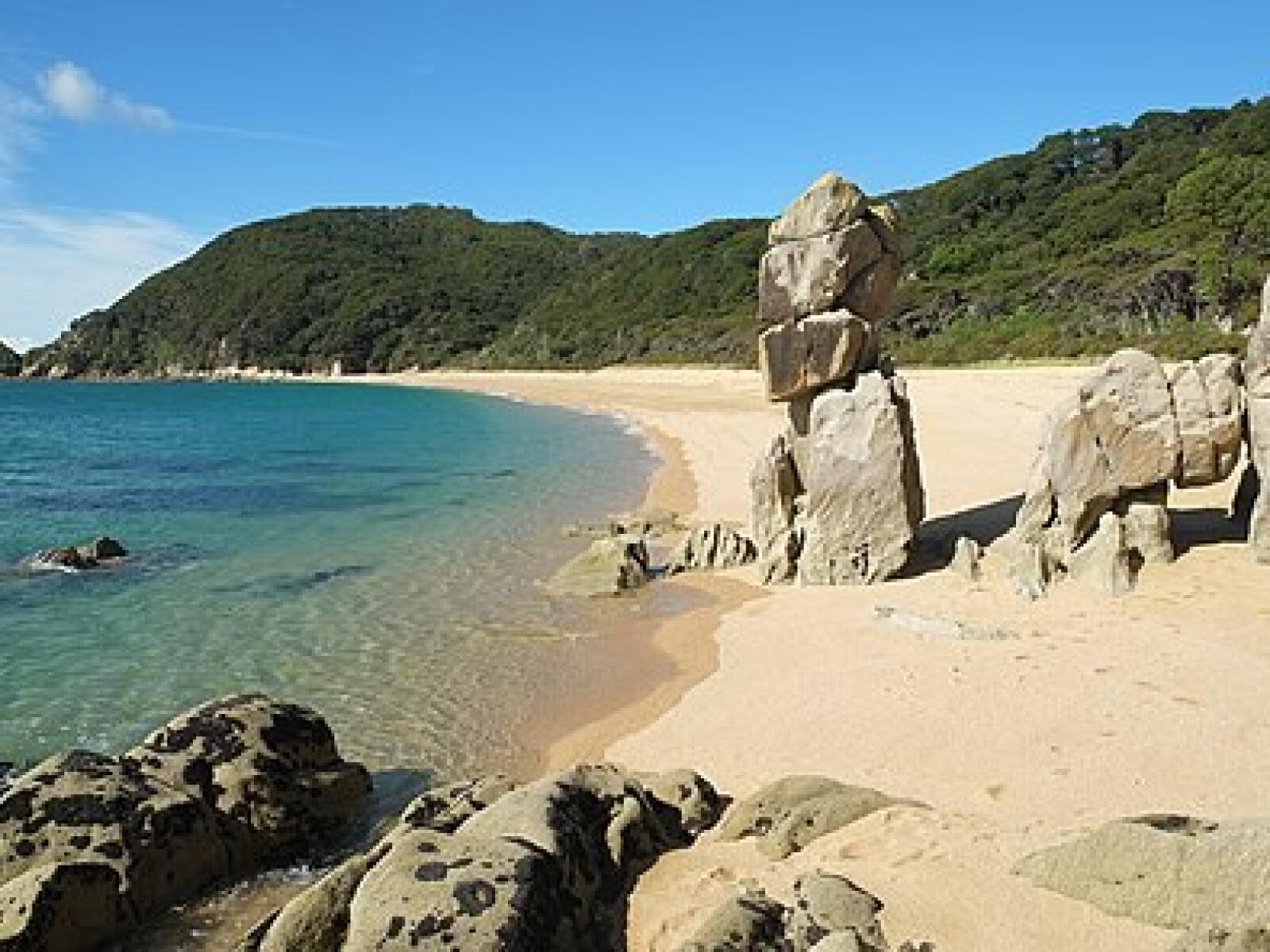
- Boardwalk and estuary sections (like Bark Bay) are good for waders and shorebirds; deeper bush sections are better for tūī, bellbird and kākā
You don't need a checklist or an early alarm to enjoy Abel Tasman's birdlife, but if you do bring both, you'll likely come away with more sightings than you expected from a "scenery first" trip.
Ready when you are
Find your own way into the park
However you like to travel, there's a trip in our library built around it: scenic cruises, guided walks, kayaking, and beachfront lodge walks inside the park. Have a look through and see what fits.